
A PROGRESS-Driven Approach to Cognitive Outcomes after Traumatic Brain Injury: Advancing Equity, Diversity, and Inclusion through Knowledge Synthesis and Mobilization
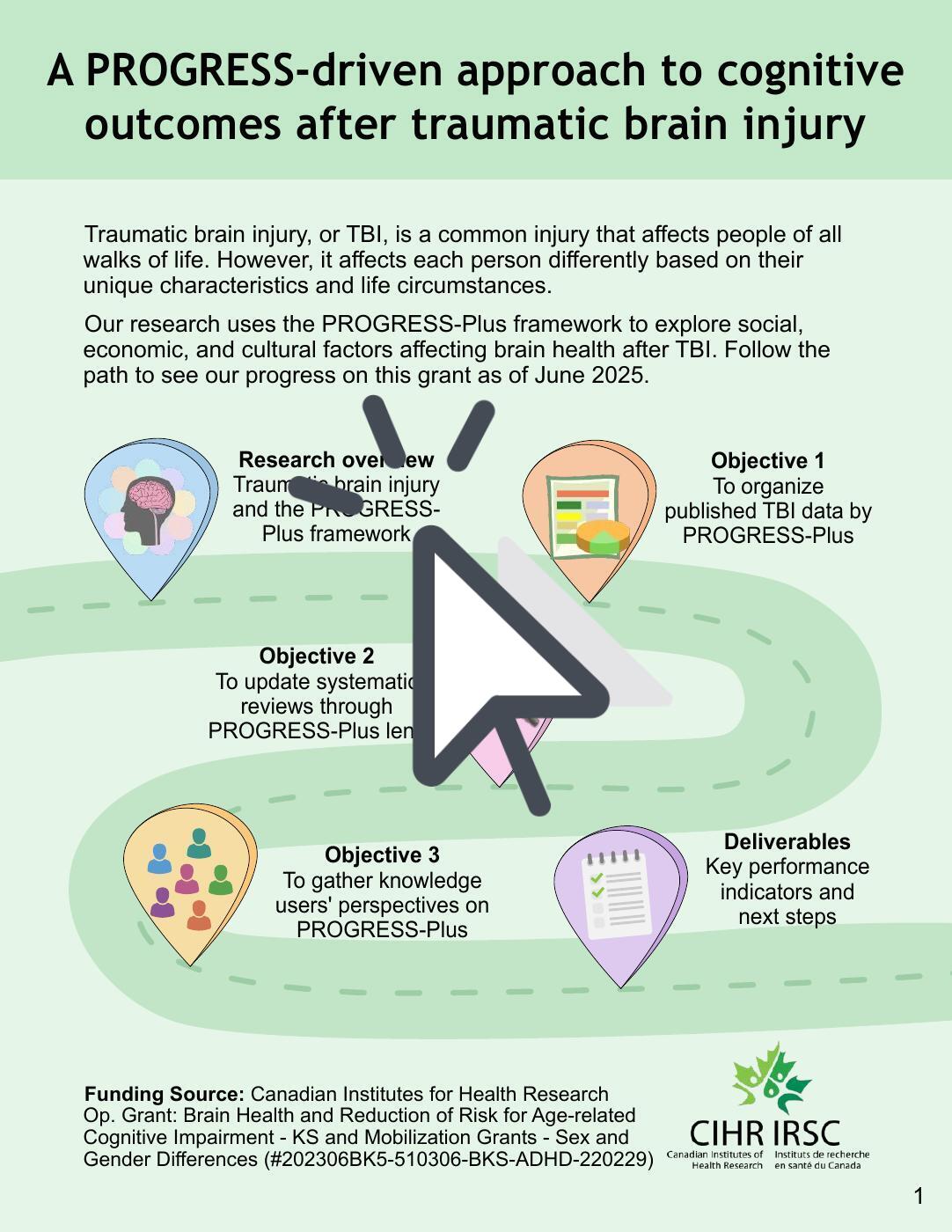
Traumatic brain injury (TBI) is a common injury that affects people of all walks of life. However, it affects each person differently based on their unique biological and social characteristics. Our research applies a framework called PROGRESS-Plus to explore how characteristics like race, income, and where a person lives, and others affect brain health after injury.
Our project has three main goals:
- Building Shared Knowledge: We composed a global research team, with members dedicated to inclusive and respectful dialogue and knowledge that foster mutual trust.
- Mapping Priorities: We will ask people with TBI and people who support them which PROGRESS-Plus parameters are most important for brain health after injury. Their responses will help us understand how to best advance knowledge on the topic.
- Sharing Knowledge: We will present our research findings in formats that are easy to understand and are openly available.
Our team is composed of scientists, clinicians, people with lived experience, equity advocates, and members of leading brain health organizations across the globe, including Brain Injury Canada, Acquired Brain Injury Ireland, and the Global Brain Health Institute. The main research sites are the KITE-Toronto Rehab University Health Network and the University of Toronto.
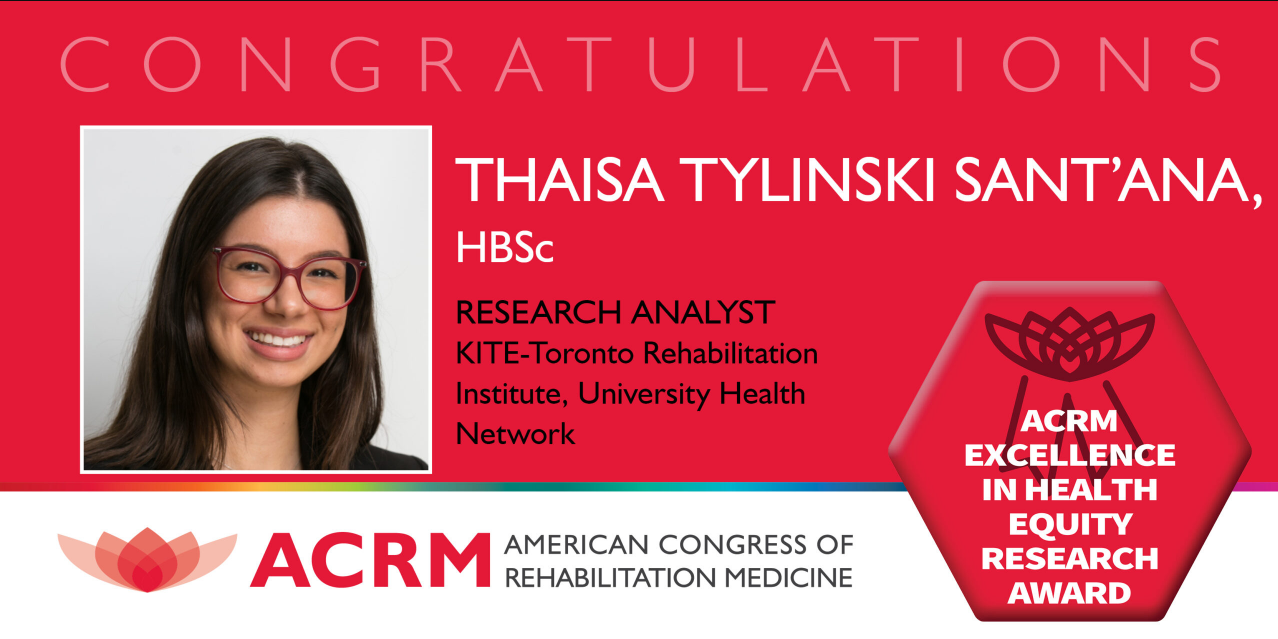
Team: Mollayeva, T, McDonald, M, Clayton, D, Colantonio, A, Einstein, G, Escobar, M, FullerThomson, E, Gately, D, Hanafy, S, Lawlor, B, McGettrick, G, Popovic, M; Study Coordinator: Tylinski Sant’Ana, T
Funding source: Canadian Institutes of Health Research (CIHR). Operating Grant: Knowledge Synthesis and Mobilization Grants – Brain Health and Reduction of Risk for Age-related Cognitive Impairment – Sex and Gender Differences.
Recent Presentations
Sex and Gender Equity in Traumatic Brain Injury: Implications for Dementia
Patients with traumatic brain injury (TBI) are at risk of developing different forms of dementia. Past studies have restricted analysis to the risk associated with brain injury severity. In our recent study supported by the Alzheimer’s Association, we observed a difference between male and female patients of similar age and injury severity in the relative risk and time to develop dementia but were left uncertain what caused the difference– sex (i.e., biological characteristics) or gender (i.e., socially constructed roles and behaviors). We aim to answer this question by covering the following objectives:
- Study how male and female patients with and without brain injury differ in exposure when we match them individually for age, sex, socioeconomic status, and place of living.
- Utilize social and health-and environment-related factors that differentiate male and female patients with and without brain injury to create a Gender Score. We will study factors within the Gender Score to determine whether they are reflecting biological differences or gender norms and behaviors.
- Build predictive models of dementia and the time to develop dementia using sex and Gender Score as primary predictors
- Validate the results and report them to the scientific community and the funders
This study will generate knowledge whether it is biological sex, socially constructed gender, or both, that drive differences in dementia evolution after injury. The results will have an important impact on research, policy, and practice because they will lay the groundwork for future research grant proposals around building hypothetical frameworks of prevention, with strong implications for future funding for prevention interventions.
Funding source: Global Brain Health Institute (GBHI). UK Pilot Award for Global Brain Health Leaders.
Recent Presentations


 BRIDGE Lab